WHO Conditionally Recommends GLP-1 Therapies for Obesity Treatment
Where are you in your GLP-1 journey?
Answer a few quick questions — get your cheapest path to a GLP-1 prescription, free.
Advertisement
Need a prescription? You can get it online
Licensed Canadian practitioners review your case online. Free delivery. $0 consult fee.
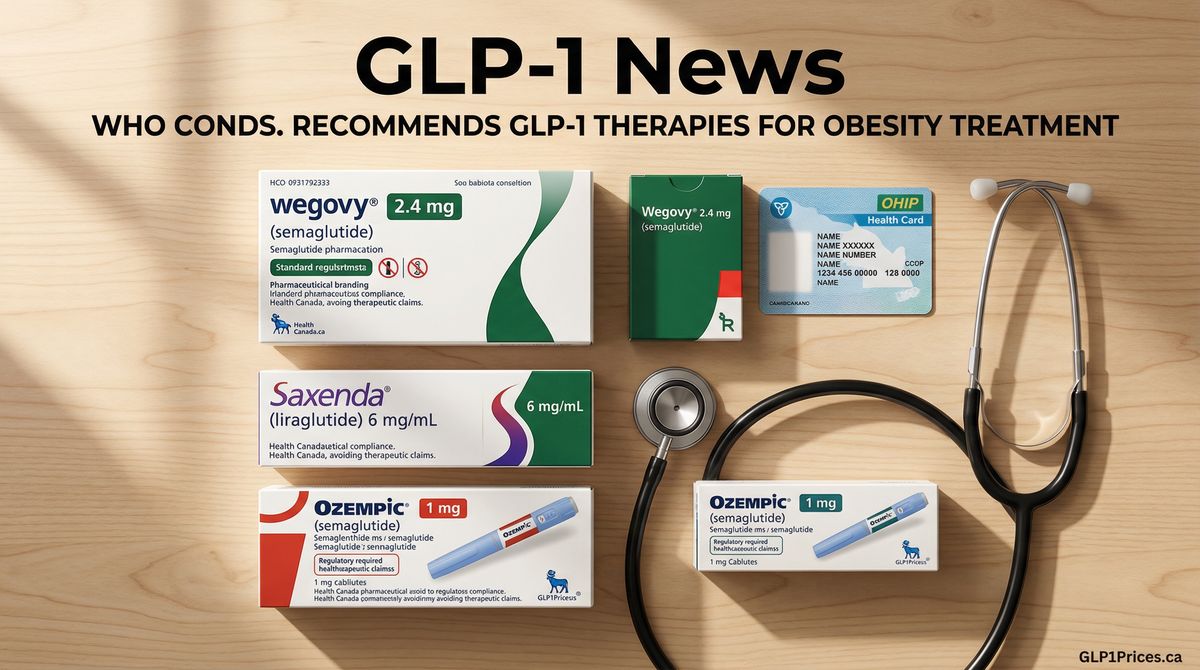
The World Health Organization conditionally recommended glucagon-like peptide-1 (GLP-1) therapies for obesity treatment in December 2025, marking a significant shift in global health policy that could influence Canadian coverage decisions.
WHO's Conditional Recommendation
The WHO's conditional recommendation represents the organization's first formal endorsement of GLP-1 therapies for obesity management. This policy change follows extensive review of clinical evidence and could influence health authorities worldwide, including Health Canada's regulatory approach to these medications.
The conditional nature of the recommendation indicates that while benefits likely outweigh risks for most patients, the WHO acknowledges variability in individual responses and the need for careful patient selection.
Current Canadian GLP-1 Medications
Health Canada has approved several GLP-1 medications that are currently available across Canadian provinces:
- Ozempic (semaglutide): Injectable medication manufactured by Novo Nordisk
- Wegovy (semaglutide): Higher-dose injectable formulation from Novo Nordisk
- Mounjaro (tirzepatide): Weekly injection produced by Eli Lilly
- Rybelsus (semaglutide): Daily oral tablet approved by Health Canada in April 2020
Impact on Generic Applications
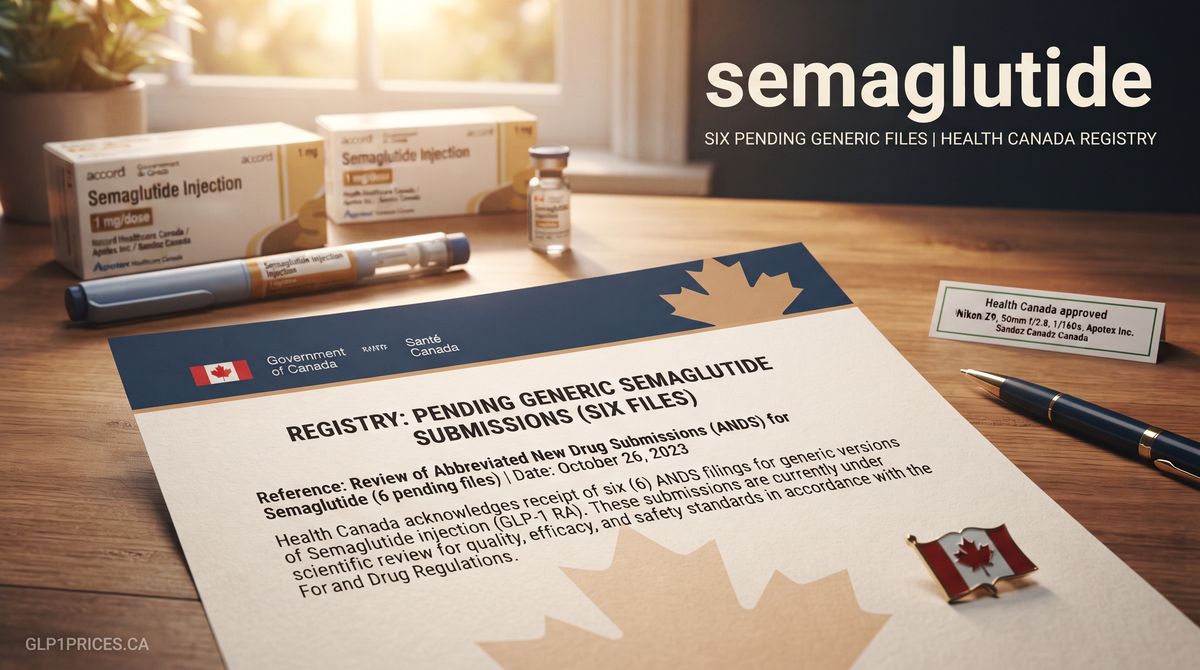
The WHO recommendation comes as Health Canada reviews nine generic semaglutide applications following patent expiry on January 4, 2026. Generic manufacturers including Sandoz, Apotex, Teva, and Aspen are among the companies seeking approval for lower-cost alternatives.
The WHO endorsement could strengthen the case for provincial drug plan coverage of both brand-name and upcoming generic GLP-1 medications. Several provinces are awaiting Health Canada approval decisions before making coverage determinations through their public drug programs.
Canadian Regulatory Timeline
Health Canada operates under a 180-day review timeline for generic drug applications, though complex submissions may require additional time. The agency's generic semaglutide tracker shows multiple applications currently under review.
Industry analysts expect the first generic approvals could arrive by summer 2026, potentially making Canada one of the first major Western jurisdictions with generic semaglutide access ahead of the United States and European Union.
Advertisement
Get prescribed online — $0 consult
Book an online medical visit and, if prescribed, get generic Ozempic (Apo-Semaglutide) shipped to your door. Flat-rate monthly pricing, no insurance required.
Coverage Considerations
The WHO recommendation may influence Canadian provincial drug plans and private insurance coverage decisions. Currently, coverage varies significantly across provinces, with some plans covering these medications under specific criteria while others maintain restrictive policies.
Alberta Blue Cross recently indicated that overall GLP-1 therapy spending is unlikely to decrease despite generic entry, citing growing utilization and continued innovation in the medication class.
Global Health Policy Context
The WHO's conditional recommendation aligns with recent regulatory developments worldwide. The organization's endorsement follows similar policy shifts in other jurisdictions where health authorities have expanded access to GLP-1 therapies.
Canadian health policy experts suggest the WHO recommendation could provide additional evidence for provincial formulary committees evaluating coverage criteria and budget allocations for these medications.
Market Access Implications
The WHO recommendation comes as pharmaceutical companies prepare for increased competition in the Canadian GLP-1 market. Novo Nordisk has introduced new brand variants including Plosbrio and Poviztra, while Eli Lilly continues expanding access to tirzepatide through various programs.
For patients and healthcare providers, the WHO endorsement may provide additional clinical guidance for treatment decisions. The FAQ section provides detailed information about accessing these medications in Canada.
This article is for informational purposes only and does not constitute medical advice.
Advertisement
Get prescribed online — $0 consult
Book an online medical visit and, if prescribed, get generic Ozempic (Apo-Semaglutide) shipped to your door. Flat-rate monthly pricing, no insurance required.
Get notified when generic prices go live
We’ll send one email the moment generic semaglutide prices are listed at Canadian pharmacies. No spam.
Track generic semaglutide prices at Canadian pharmacies
Apo-Semaglutide launched in May 2026. Get notified when it's available at your pharmacy or when prices change.
More GLP-1 news
- Health Canada Adds Submission Class Data to Drug Review Tracker
- Health Canada Approves New Novo Nordisk Semaglutide Brand Names
- Aspen Pharmacare Targets Q3 2026 Generic Semaglutide Launch
- Generic GLP-1 Medications Expected on Canadian Shelves This Summer
- Study: Generic Semaglutide Production Costs Just $3 Monthly
- Health Canada Eyes Summer 2026 Generic Semaglutide Approvals