GLP-1 Medications Straining Canadian Employer Drug Plans in 2026, Report Finds
Where are you in your GLP-1 journey?
Answer a few quick questions — get your cheapest path to a GLP-1 prescription, free.
Advertisement
Need a prescription? You can get it online
Licensed Canadian practitioners review your case online. Free delivery. $0 consult fee.
GLP-1 receptor agonist medications are rapidly becoming one of the most significant cost pressures facing Canadian employer benefit plans, according to Alberta Blue Cross's 2026 Drug Pipeline and Plan Management Report. The report warns that while generic semaglutide is expected later this year, it will "help only at the margins" given the pace at which utilization is growing across all plan types.
The Numbers Behind the Pressure
The Alberta Blue Cross report highlights the stark financial reality for plan sponsors:
- Wegovy (semaglutide 2.4mg) costs approximately $5,000 per patient per year at current Canadian list prices — making it one of the most expensive drugs in the chronic disease management category
- Ozempic (semaglutide for diabetes) costs approximately $3,000–$3,700/year depending on dose
- Mounjaro (tirzepatide), newly covered by some plans, adds further cost at comparable or higher annual rates
Across employer plans that added GLP-1 coverage in 2024–2025, total drug spend in the weight-management category increased by an estimated 300–500% year-over-year, according to the report's aggregate data.
Why Generic Entry Won't Fully Solve the Problem
Many plan sponsors had hoped that the anticipated arrival of generic semaglutide in Canada would significantly reduce costs. The Alberta Blue Cross report tempers those expectations.
"Generic entry will help only at the margins," the report states, citing two key factors:
- Utilization is growing faster than price reductions can offset — as GLP-1 medications become more widely prescribed, the total drug spend continues to rise even as per-unit costs may decrease
- Generic products typically launch at 70–80% of brand-name list prices in Canada, compared to the more dramatic generic discounts seen in the US market, due to Canada's different generic drug pricing framework
Health Canada is currently reviewing generic semaglutide applications from manufacturers including Sandoz, Teva, and Apotex. First generic approvals are anticipated in mid-2026, but market penetration — and meaningful price competition — may take several additional quarters to materialize.
New Indications Are Expanding the Eligible Population
A significant driver of the accelerating cost pressure is the growing list of approved indications for GLP-1 medications. The report specifically flags two new regulatory developments:
Advertisement
Get prescribed online — $0 consult
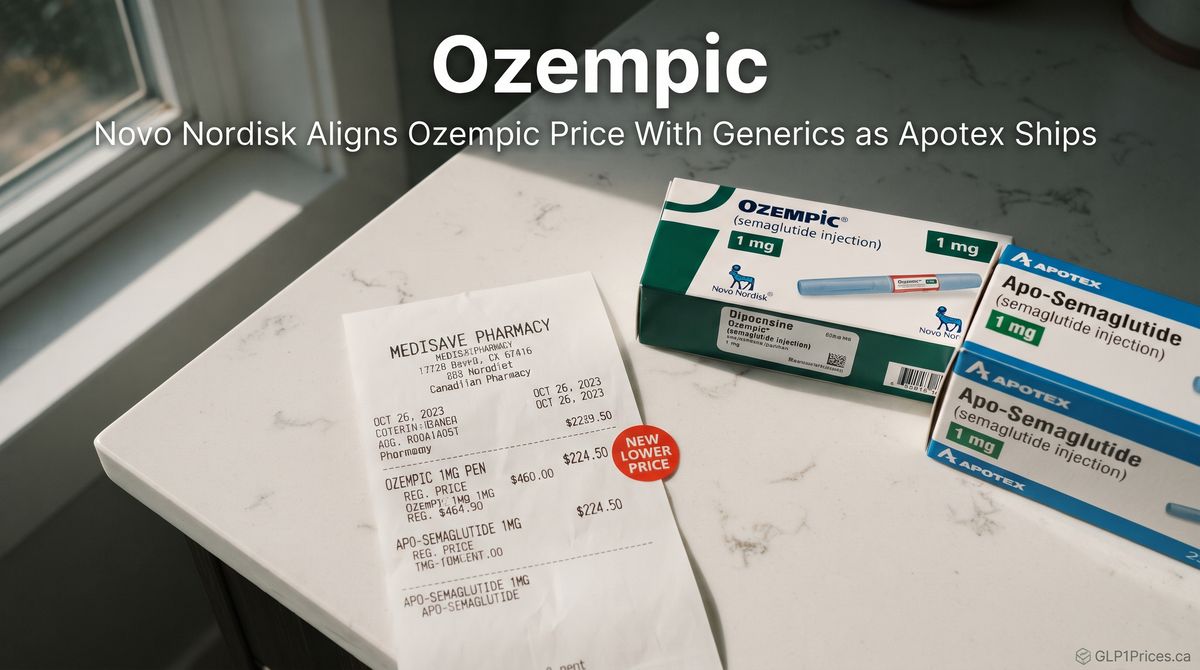
Book an online medical visit and, if prescribed, get generic Ozempic (Apo-Semaglutide) shipped to your door. Priced per pen, no insurance required.
- Wegovy approved for MASH (metabolic dysfunction-associated steatohepatitis, also called non-alcoholic fatty liver disease): Health Canada's approval of Wegovy for this indication dramatically expands the population of patients who can receive a prescription on-label. MASH is estimated to affect approximately 1 in 4 Canadians to varying degrees, representing a vastly larger potential patient pool than obesity alone
- Zepbound (tirzepatide) under review for obstructive sleep apnea: Eli Lilly has filed with Health Canada for an additional indication for tirzepatide targeting sleep apnea, a condition affecting an estimated 5–6 million Canadians. If approved, this would further expand GLP-1 eligibility to millions of additional plan members
From a plan design perspective, each new indication creates pressure to cover the drug — since denying coverage for an approved indication can expose employers to human rights or disability accommodation challenges in certain circumstances.
How Employers Are Responding
The Alberta Blue Cross report outlines several strategies plan sponsors are considering or implementing:
- Step therapy requirements — requiring patients to try lower-cost alternatives (such as metformin or older GLP-1 agents like liraglutide) before approving coverage for newer, higher-cost options
- Maximum quantity limits — capping covered doses or requiring annual reauthorization with documented clinical outcomes
- Indication-specific coverage — covering GLP-1s for type 2 diabetes (where clinical evidence is most established) but applying stricter criteria for weight management or other indications
- Preferred drug lists — negotiating preferential pricing with specific manufacturers in exchange for formulary placement
None of these strategies fully eliminates the cost pressure, but together they can reduce total drug spend by an estimated 20–35%, according to the report.
What This Means for Out-of-Pocket Costs
For Canadians with employer benefit plans, the practical impact depends heavily on how their plan responds to this cost pressure:
- Plans that introduce higher cost-sharing ratios for GLP-1 drugs will shift more expense to employees
- Plans that implement maximum dispensing limits may require patients to pay out-of-pocket for higher doses
- Plans that don't cover GLP-1s at all — still a majority of Canadian benefit plans — leave patients to pay the full retail price
Canadians without drug coverage can compare current retail prices across pharmacies at GLP1Prices.ca to find the lowest available price in their province.
This article is for informational purposes only and does not constitute medical advice. Drug pricing and benefit plan coverage varies by insurer, employer, and province. Consult your benefit plan administrator or pharmacist for information specific to your coverage.
Advertisement
Get prescribed online — $0 consult
Book an online medical visit and, if prescribed, get generic Ozempic (Apo-Semaglutide) shipped to your door. Priced per pen, no insurance required.
Get notified when generic prices go live
We’ll send one email the moment generic semaglutide prices are listed at Canadian pharmacies. No spam.
Track generic semaglutide prices at Canadian pharmacies
Apo-Semaglutide launched in May 2026. Get notified when it's available at your pharmacy or when prices change.
More GLP-1 news
- Generic Ozempic Could Cost 35% of Brand Price by End 2026
- Study: Semaglutide Could Be Made for $3 Monthly in Canada
- 3 Million Canadians Use GLP-1 Drugs as Generic Competition Looms
- BC Launches National Pharmacare on March 1, 2026: What It Means for Drug Coverage
- Novo Nordisk Warns of Sales Decline as Generic Semaglutide Threatens Canadian Market
- Novo Nordisk’s CagriSema Falls Short Against Zepbound in Head-to-Head Trial